
The Riches of the St. Croix River
By John Edstrom
The sleek, white, and blue drift boat buzzes down a crystal clear river that is filled with hard-fighting fish that are eager to attack a surface fly. Large, scattered pine trees rise from high banks along the river. Stoic bald eagles stand guard in the branches of a few of the old matriarch trees along the ten-mile float. In the bow of the boat, an experienced fly caster throws precise casts in rhythm with their fishing partner, who is fishing from the stern of the boat. Both fly fishers hook and land many satisfying, hard-fighting fish that day, from 12 to 19 inches.
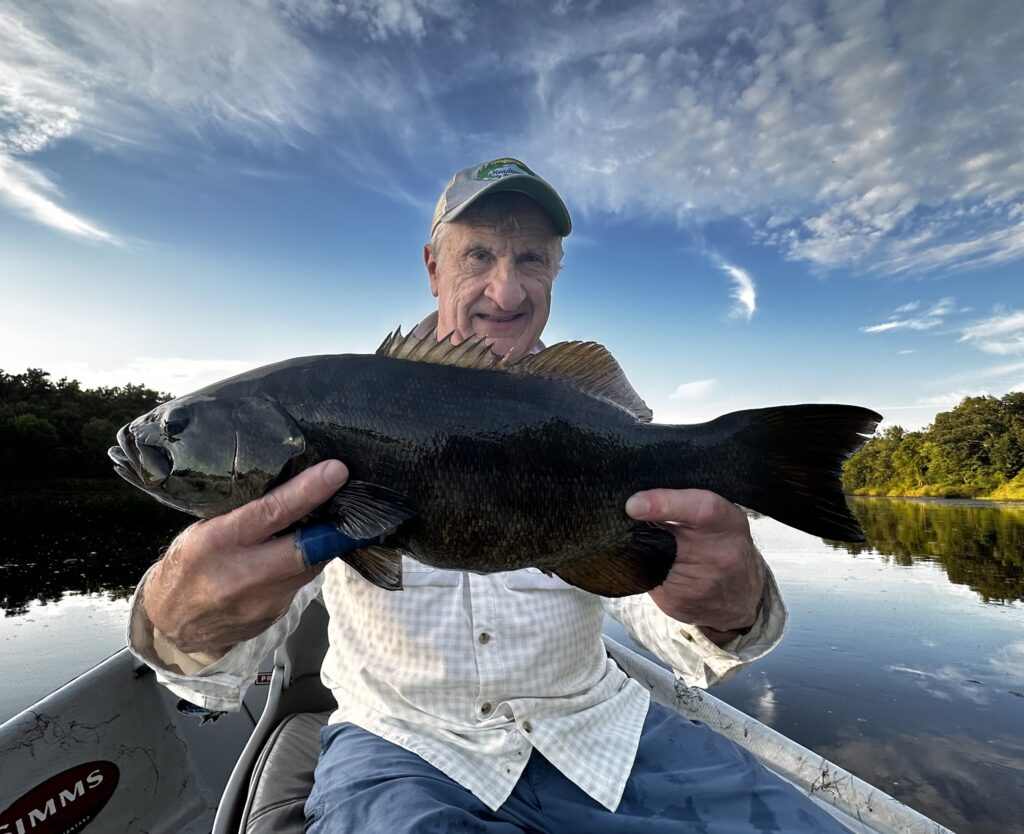
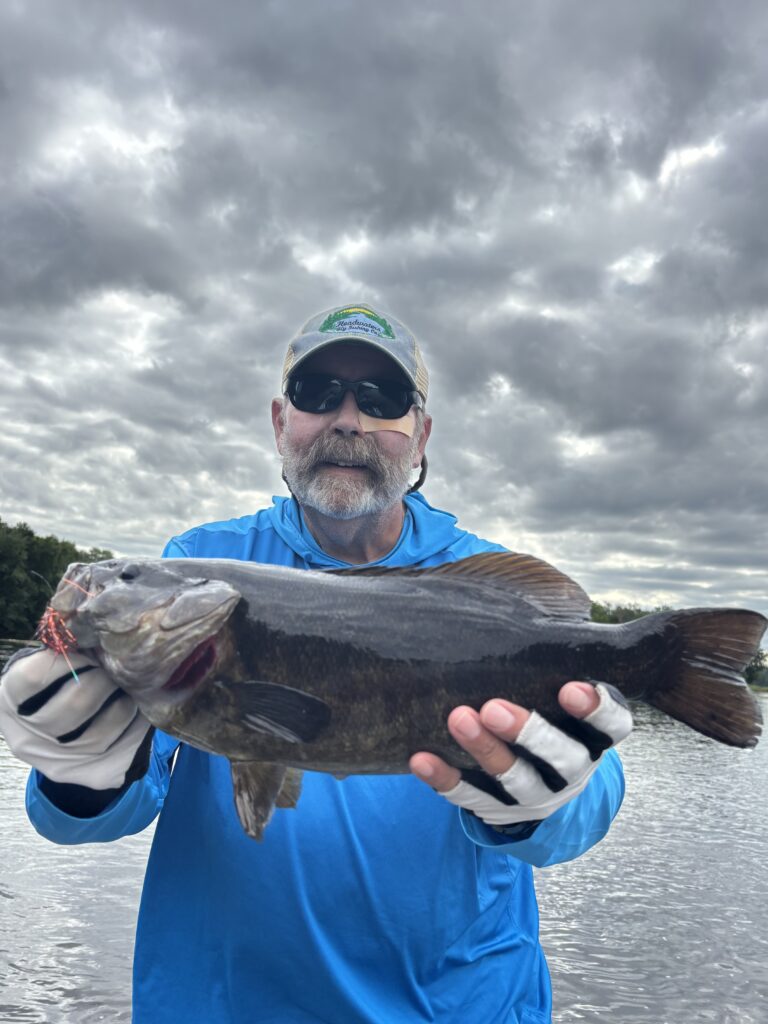
Alert the media: this is not the Big Horn, Yellowstone, Green, or Missouri. These fly fishers are within one and a half hours of the Twin Cities of Minneapolis and St.Paul. They are fly fishing on the wild Upper St.Croix River for the king of warmwater game fish, Smallmouth Bass.
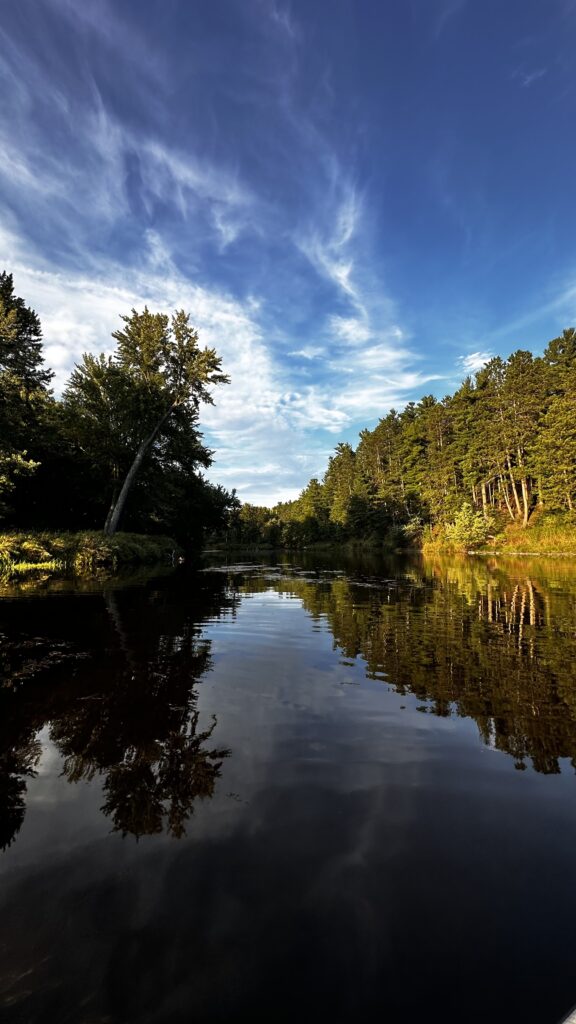
The humble source of the historic St.Croix River is located on a divide that separates the Lake Superior and Great Lakes drainage and the Mississippi River drainage. A lone spring on the edge of a northwoods swamp flows south to form the headwaters of this unique river. Heading north from the same deep woods, spruce swamp flows the headwaters of another famous river, the Brule. The south-flowing spring flows into a large pond, then into St.Croix Creek. This small stream flows into Upper St.Croix Lake, and from there the St.Croix begins its historic wilderness journey to the Mississippi and the Gulf of Mexico. The St.Croix is 165 miles long, unpolluted, and protected by the National Park Service and the Wild and Scenic River act.
The Dakota and Ojibwe Indians were the first human inhabitants of the St.Croix Valley. The region was rich in game and fish as well as beaver. The Ojibwe took advantage of the plentiful beaver and allied themselves with the first French trappers. With French-supplied guns, the Ojibwe eventually drove the Dakota Sioux onto the plains of southern Minnesota.
Daniel Greysolon, Sier du Luth was the first recorded white man to visit the pine-rich valley of the St. Croix River. In 1679, this member of the lesser French Nobility entered the Great Lakes region. At the strategic Dakota Village of Izaty’s on Mille Lacs Lake, he claimed a vast, unknown wilderness empire for Louis XIV, King of France. When Du Luth traveled the watersheds of western Lake Superior, the Native Americans told him of twin streams joined by a carrying place and leading south to the mighty Mississippi. He learned that “eight leagues from the extremity of Lake Superior on the South side “ was a rough, tumbling river flowing north into the lake, which the Sioux called Newissakodekouat. To the Ojibwe, it became Newissakode (Burnt Wood Point) and Wiskada Sibib (Burnt Pine River). The French named this narrow and turbulent stream the Bois Brule, and we know it today as the Brule.
In 1683, a voyageur named La Salle reported Du Luth had “ascended the river Nemitsakouat” and, after a short portage, went down the St.Croix where he “passed forty leagues of rapids”. On this trip, the French Explorer built a fur trading post and called it Fort St.Croix. This name was printed on Jean-Baptiste Franquelin’s map in 1688.
After the beaver supplies declined and the European Market for beaver hit bottom, the next big industry to come to the St.Croix valley was logging.
Until the early 19th century, the St.Croix valley was a land of great white and red pine. Native Americans, explorers, voyageurs, and European Trappers had all traveled the same pristine river that now hosted huge log drives and logging operations. The Weyerhauser Corporation was born in the St.Croix Valley. Weyerhauser was given huge pieces of land, well stocked with the famous old growth pine, in trade for land to develop the railroad by James J Hill. The rough and tough lumberjacks that harvested the virgin stands of extensive old-growth forest missed a few pine trees along the river, and today they stand guard for future generations to ensure that the wild look of the St.Croix remains intact. Many small logjams remain today in the river’s flow as reminders of a long-gone era of horse-drawn sleds hauling huge piles of logs through deep snow until spring thaws halted operations each winter.
Erosion and scarring of the river bed by the huge log drives took their toll on the fish populations of the St.Croix. Smiley Sundquist, manager and head guide of the Grantsburg Associates, a fly fishing only camp located on the banks of the upper St.Croix, adds, “According to the old timers, before the logging days, the river bed was solid rock from top to bottom. Erosion from the logged-out areas caused some of the rock areas to be covered with sand over 150 years ago. Can you imagine the smallmouth habitat back then?”
“Many of the islands that are in the river now were created by log jams from the logging operations.”
Once the logging stopped, the river began healing itself, and the fish populations rebounded. The river supported a strong heritage of sport fishing dating back to the early 1900’s. The first fly fishing operation to do business on the river was owned by Bill Huston, a former St.Croix River fly fishing guide himself and a longtime resident of Danbury. Bill and his father operated their fly fishing guide service dating back to the early 1900’s. The camp moved from the Nevers Dam site in the mid-thirties to Nelson’s landing in 1936 and then to Round Lake near Danbury. The camp was operated at this location until 1942, when a gentleman by the name of Einar Nelson, who guided for the Huston guide service, purchased the business. Einar Nelson’s fishing camp operated for many years, was sold again and run by Larry Dahlberg. The camp now operates as the Grantsburg Associates and was managed at that time by Doug (Smiley) Sundquist, now in the capable hands of Buzzy Schwartzbauer, also from Grantsburg.
Several other fly fishing guides, including myself, operate on the St.Croix today as well. They are all committed to maintaining a fly fishing resource that will remain a high-quality destination for the next generation of fly fishers.
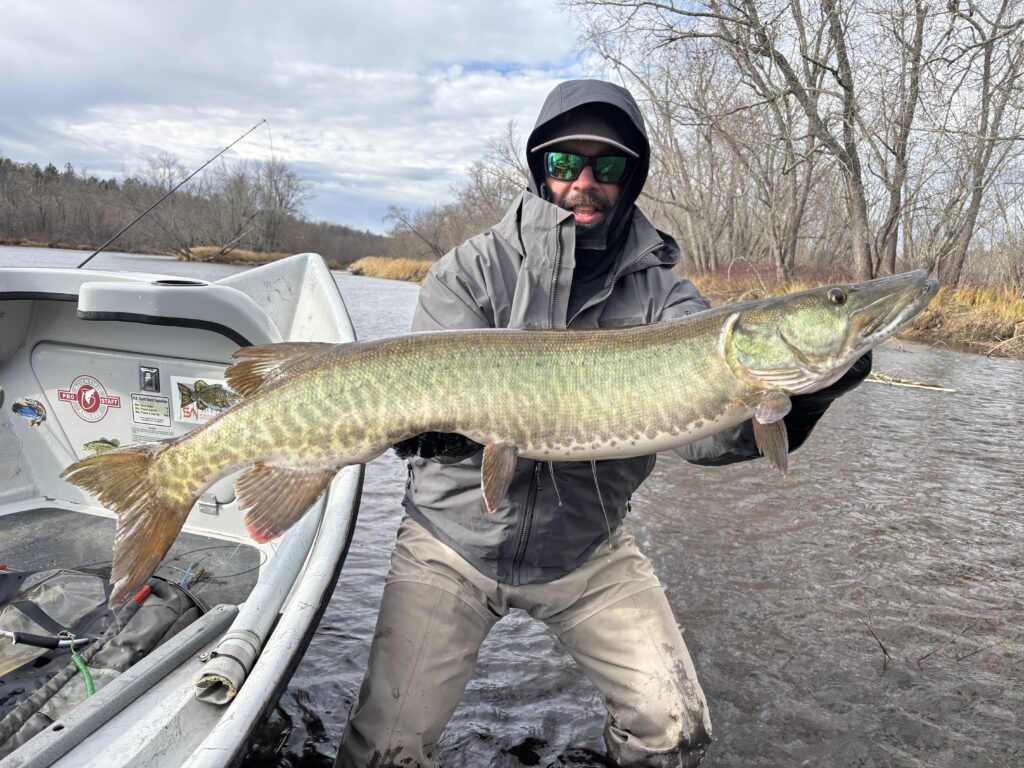
The St. Croix chooses its fish well. The native Smallmouth Bass offer superb fly fishing opportunities. Northern Pike, Musky, and Walleye are also worthy fly rod targets found in the St.Croix. Surveys show strong populations of Northern Pike and Musky, and we find enough nice pike each year on our floats to make these great fish an interesting bonus catch. Anyone who fishes the St.Croix regularly will hook musky as well. Many encounters with toothy fish like Pike and Musky will end in seconds with a sliced tippet unless you incorporate a wire or fluorocarbon tippet. Each year, we land pike and muskies that have the fly seated perfectly in their jaw with the tippet just avoiding their razor-sharp teeth.
There are many Tributaries of the St.Croix that offer good fly fishing opportunities and have populations of game fish as well. The Snake and the Kettle in Minnesota and the Namekagon and Clam on the Wisconsin side are a few of the best rivers to fish for warmwater species. The Namekagon and Clam are both trout streams in their upper reaches. The Namekagon River is a popular canoe trip for many people looking for a wild float. The famous Kinnikinnick and Namekagon Rivers are the most notable trout streams in the watershed. All of these rivers are part of the History of the St.Croix Valley.
The St.Croix River is a personal experience for many fly fishers. My father started me on the St. Croix at an early age. I will never forget the first smallmouth that I encountered. After brook trout fishing for a few days, my father must have thought young John was ready for a little bigger water, so we ventured out onto the St.Croix in a canoe to fish for smallmouth bass. I can vividly remember casting under an overhanging tree and watching my live grasshopper disappear with a big swirl. The ensuing fight was fierce for a youngster. I remember losing that fish, but the shock of the raw power in that fish is still with me. Native Brook trout are beautiful, but are a poor warm-up act for the fight of a smallmouth. Over 30 years (Edit: 50 years now) later, I am still captivated by the St. Croix.
The Wild and Scenic Rivers Act has preserved the wilderness setting that is part of the wonderful aesthetics of this river. The National Park Service has managed this river well over the years. A great full-color map is available from the Park Service that will help anyone plan a trip for one day or to float the river for a week or more. Marked on the map are several access points with many canoe launches as well as riverside campsites.
Bald Eagles soar overhead most days. The ubiquitous whitetail deer are regular visitors to the river’s edge. They come to feed on emergent vegetation as well as to get away from the omnipresent mosquitoes. The St.Croix Valley is home to black bears and timber wolves as well. I have encountered both bears and wolves over the years along the river. They are the original residents of this wild river valley.
A fly fishing float trip on this river is more than just a fishing trip. There are magnificent pine, tamarack, and spruce trees, and also many wild flowers to enjoy. The abundance of bird life is excellent. Each season has its own bounty along the St.Croix. “Of all the rivers I have fished, the St. Croix is my favorite,” says Tom Andersen, longtime St.Croix Fly fishing guide and Granstburg Wisconsin, native.
Spring is the time for drumming ruffed grouse, woodcock sky dances, and fishing a hatch on the many trout streams that are tributaries of the river. Fly fishing for Musky can be good this time of year as well. The Wisconsin opener for game fish is usually the first weekend in May. Smallmouth bass are spawning this time of year, up until mid-June, and are best left alone at this time of year.
Summer is usually quite warm with long days and cool nights. A warm summer evening on the river is magical. Some evenings it seems as if the wild creatures of the river valley are aware of this special time and are putting on a display just for us, quiet, stealthy floaters. I have quietly rowed up to several of these indigenous residents as sort of a St.Croix River valley fly fishing trip/Safari.
Fall along the river is known for spectacular fall colors, fly fishing for Musky and saying goodbye to a special river for another winter season. The cooling water of fall generates a migration of smallmouth bass to slow deep water. The fish are catchable this time of year, but weighted baitfish patterns like a Clouser minnow or shiner imitation are effective.
The wide and shallow St.Croix is perfect for fly fishing. Like several guides who work the river, I float my clients on one of several 8 to 10-mile drifts in a Low Profile Hyde Drift boat. There is a classic feel to floating the St.Croix in a drift boat. Any south breeze can be trouble for any drifting fly fly fisher so stay in touch with some sort of weather service. Many fly fishers travel the St. Croix in canoes as well as the inflatable pontoon float boats. The main channel can be very shallow during the dry days of late summer and early fall, so the appropriate river craft should be able to drift quietly through inches of water at times. Perfect smallmouth bass habitat on the St.Croix includes long stretches of rocky runs and riffles which in low water can be tough on the hull of any type of river boat.
This river valley has attracted all kinds of people in it’s history. This part of Minnesota was described by the Swedish novelist Fredrika Bremer as “ a glorious country and just the right country for a new Scandinavia.” Swedish families began pouring in around the Mid 1850’s. They stayed.
Throughout its storied history, anglers have stayed too. A summer day spent casting a surface bug for smallmouth on the St.Croix is one of our great fly fishing treasures. The fishing can be good to great some days. As with all fishing, there will be challenging days, but this is a river to be enjoyed for all its attributes, including its wild creatures and natural beauty.
“The St. Croix is a testament to catch and release. The Fishing is better now than I can remember.” Says Tom Andersen, who has been fishing the river since 1958.